
Chisinau, the unsung capital of Moldova, is a country I’ve been itching to return to after I first made this guide way back in 2015. With budget flights now connecting Chisinau to London, I finally had the opportunity to return in March 2026. Much has changed in the last decade, so keep reading for my updated guide to what could be Europe’s most up-and-coming city.
“You have to try Mămăligă!”
As my Wizz Air flight began its descent into Chisinau, I was enthusiastically schooled in the delights of Moldovan cooking by my fellow passenger. She was a Chisinau local, but told me she’d lived and worked in the UK for the last decade. Her enthusiasm for her homeland was infectious, though, and I soon had a long list of Moldovan dishes to try and sights to see in Chisinau.
Like many of the other passengers in the surrounding seats I spoke with on the 3-hour flight from London, she was returning to Moldova to see family. That’s no surprise, really, given how the UN’s International Organisation for Migration estimates that as many as 1.2 million Moldovans live and work abroad. Given that the country has a resident population of 2.4 million, an extraordinarily large percentage of Moldovans live outside their country’s borders.
Later, in Chisinau, a taxi driver gave me some explanation for this exodus. “Life is good in Moldova,” he told me. “You can live a great life if you want to. The wine is good, the food is better. But there is corruption. There are few jobs.”
What struck me, however, is how the number of Moldovans living abroad also far exceeds the number of tourists visiting the country. Moldova is typically cited as Europe’s least visited country, and indeed, in 2025 the National Bureau of Statistics of the Republic of Moldova recorded 525,100 visits to tourist accommodation facilities. Almost half of these were domestic tourists, while the majority of international visitors arrived from neighbouring Romania or Ukraine.
Promisingly, however, these figures also represent a 10% increase on the previous year. While visitor numbers are comparatively low compared to elsewhere in Europe, in my opinion, Chisinau could well be the next great European city break. The capital has reinvented itself since my last visit a decade ago. As Soviet hotels crumble, luxury and boutique hotels appear in their place. There are trendy wine bars and al fresco cafes. The world’s largest wine collection is a short taxi ride away, and there’s even a beach. There’s also history, local markets that have never lost their character, and of course, you’re just a short Marshrutka ride away from the geopolitical oddness that is Transnistria.
So if you’re planning a trip to Chisinau, then get in quick before the crowds arrive. And when you do land in the capital, here are the best things to do in Chisinau.
Table of Contents
Chisinau Quick Facts
Country: Moldova
Population: 720,000 (including wider municipality)
Languages: Officially Romanian (Russian also widely spoken)
Currency: Moldovan Leu (£1 is approximately 23 Moldovan Leu). Euros widely accepted.
Airport: Chisinau International Airport
Best way to depart/arrive: On the Soviet-style sleeper train to/from Bucharest.
How long to spend here: 2/3 days minimum.
Best thing to do: Visit the world’s largest underground winery and wine collection.
Best place to try local food: La Placinte
Best hotel: My top pick for value and comfort is the Roxen Hotel & Spa.
Travel Tramp’s Top Tip: Allow an extra day for a day trip to the Pridnestrovian Moldavian Republic, a breakaway territory an hour’s drive from Chisinau that’s better known as Transnistria.

The best things to do in Chisinau
Here are my top things to do in Chisinau.
1. Start at the Triumphal Arch
No, you’re not in Paris. You’re in Chisinau. But the best place to start your sightseeing tour of the capital is with a visit to the Triumphal Arch, Moldova’s answer to the far more famous Arc de Triomphe in the far more visited city of Paris.
The Triumphal Arch dates back to 1840, and it was built to commemorate the Russian Empire’s victory over the Ottoman Empire in the earlier Russo-Turkish War fought between 1828 and 1829. The Russian victory solidified their hold over a region known as Bessarabia, which includes large parts of what’s now modern Moldova. Whether this was a victory for the Moldovans or not is another question, given the country fell under Russian and then Soviet control until independence in 1991.
Nevertheless, the arch sits in the Great National Assembly Square, opposite Government House, right in the heart of the Moldovan capital. So it’s the perfect place to soak up a little history before venturing deeper into the city.

2. Explore the Great National Assembly Square and Nativity Cathedral
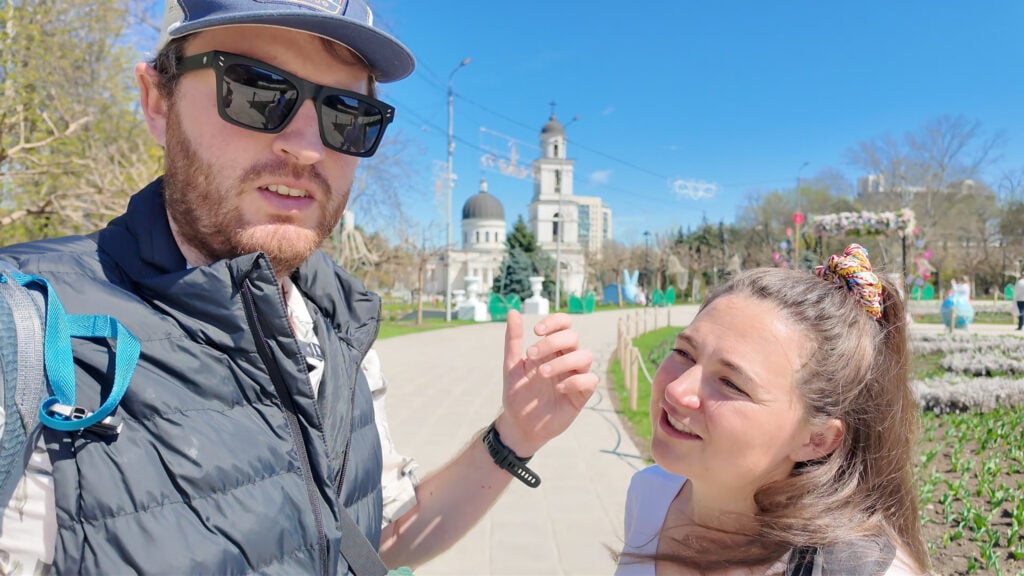
The Triumphal Arch is really part of the Great National Assembly Square. It’s the city’s most prominent public space, where you’ll find Government House (where the Moldovan government sits) and famous sights like the Nativity Cathedral, which is the home of the Moldovan Orthodox Church.
The square has traditionally been a space for both celebrations and demonstrations. When I first visited Chisinau in 2015, there were hundreds of protestors camped out here in a mini-tent city. If I remember correctly, they were arguing for greater integration with the European Union at the time. In March 2026, there were colourful installations celebrating the upcoming Orthodox Easter festivities.
During the Soviet era, Victory Parades were held on the wide boulevard. As the Soviet Union collapsed, there were frequent protests against Soviet rule. On my latest trip, the politics of the day seemed to take a back seat in the sunshine. The adjacent Cathedral Gardens are a pleasant place to walk around, and you’ll often find flower sellers with colourful floral offerings to peruse. I’d highly recommend taking a peek inside Nativity Cathedral, where you’ll find some glorious frescoes.
3. Meet Moldova’s national hero in Stephen the Great Central Park
A short stroll from the Great National Assembly Square brings you to Stephen the Great Central Park, where you can come face-to-face with Moldova’s national hero.
The park itself is named for Stephen the Great, a 15th-century warrior prince who ruled over the Principality of Moldavia. This medieval principality encompassed much of what’s now modern Moldova, and Stephen the Great is revered for fighting off Ottoman armies and preserving Moldavian autonomy.
Enter the park, and you’ll find a statue dedicated to the man himself, which is frequently the scene of flower and wreath-laying ceremonies during national holidays, or when foreign dignitaries visit Chisinau.
Read more: Is Moldova a Country? Everything You Need to Know.
4. Pay your respects at the Eternity Memorial Complex
The admittedly sombre Eternity Memorial Complex primarily commemorates the many Moldovans who fought, and often died, during the Second World War (or the ‘Great Patriotic War’, as it was known during the Soviet times).
Moldovans haven’t forgotten the sacrifices of Soviet soldiers. I was moved by the sight of the eternal flame blazing away in the centre of the pyramid-like memorial, while an honour guard of Moldovan soldiers watches over the complex.
The complex also commemorates more recent struggles too. Namely, the conflict with the breakaway state of Transnistria that broke out during the collapse of the Soviet Union.
The Eternity Memorial Complex is at least a 40-minute walk from the centre of Chisinau, so I’d recommend hopping in a Bolt if you’re short on time.

5. Step back in time at the National Museum of History of Moldova
I always make sure to visit national museums when I’m in a capital, and Chisinau was no different. For an excellent overview of Moldovan history, I’d recommend spending an hour or two browsing through the exhibitions at the National Museum of History of Moldova.
Outside the grand building housing the museum, you’ll find a statue of a Capotline Wolf. It’s a replica of one in Rome, and presumably represents the connections Moldova had to the Roman world. The museum itself combines archaeology and history, and when I first visited a decade ago, it very much had the feel of a Soviet institution (it was the type of museum you find in many former Soviet nations, where someone always seems to follow you around turning the lights on and off as you move from room to room).
It’s been updated since then, and there’s a great selection of exhibits charting Moldova’s history through the ages. There are plenty of changing exhibitions too. Recently, they’ve held exhibitions like ‘Soviet Moldova: Between Myth and Gulags’, alongside ‘A Journey Into the World of Mechanical Music’.
Entrance is just 50 Moldovan Leu, but remember it’s closed on Mondays.
Read more: I was the only tourist in Moldova
6. Explore Soviet-era architecture
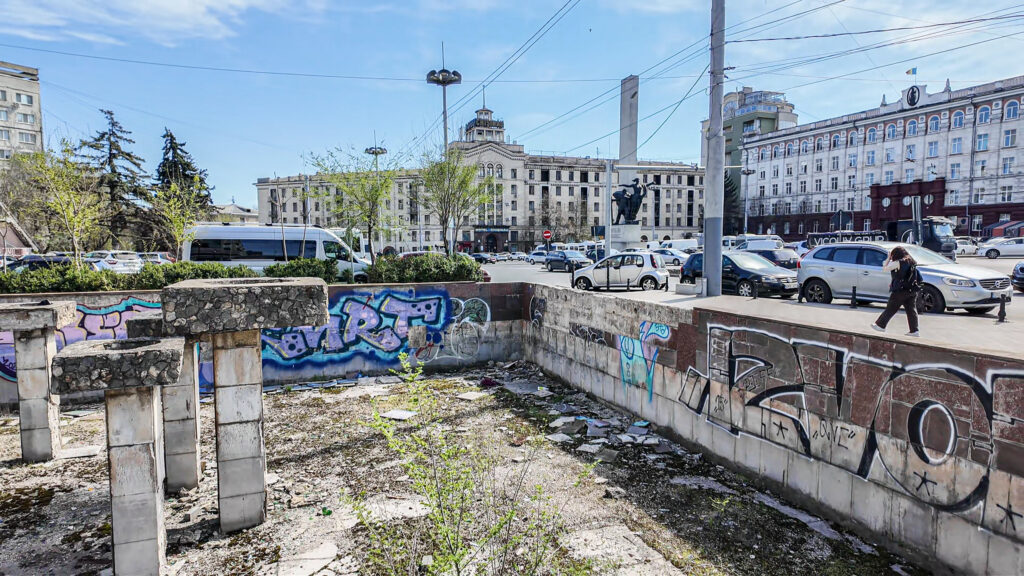
Okay, so I know I mentioned at the start of this guide that Chisinau is reinventing itself. It’s moving away from its Soviet past. Much of that is reflected in the ever-changing urban landscape, where many of the Soviet statues have either been moved or removed, and where many of the brutalist buildings are now defunct.
But of course, any lover of history (myself included) also knows that Chisinau is still one of the few easily accessible places left in Europe where you can still trace the Soviet past. The legacy is everywhere, really, given how a large percentage of the city’s residents still live in Khrushchevkas, distinctly Soviet-style apartment blocks largely built during Khrushchev’s era.
A few of the most famous Soviet-era buildings left include the following, which I’ll also list on the map of things to do in Chisinau at the end of this guide:
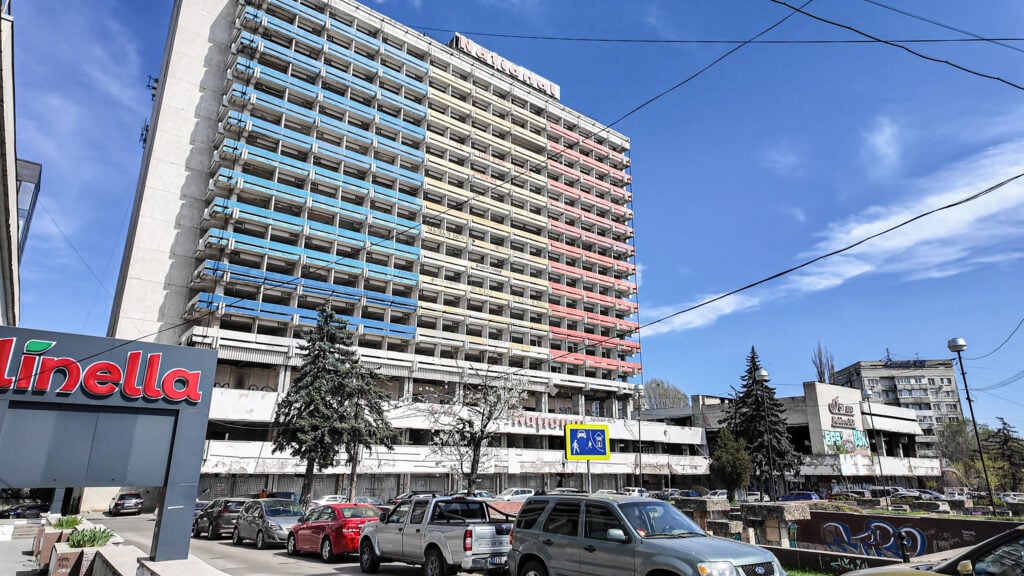
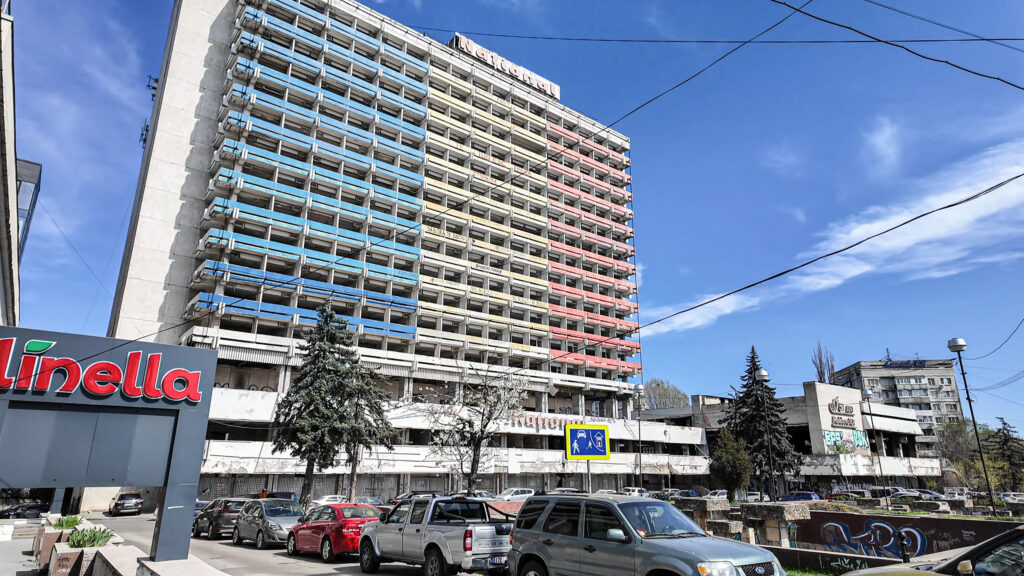
- The National Hotel: 17 floors high, the National Hotel (formerly known as InTourist) was once the pride of the Soviet Union. The building has deteriorated further since my first visit, although the grey exterior has been painted in the colours of the Moldovan national flag to liven things up a bit.
- Chisinau Hotel: Located opposite the National Hotel, amazingly, you can still spend the night in this former state-owned establishment.
- Monument to the Liberation: Outside Chisinau Hotel, the Monument to the Liberation looms large, as it has since its construction in 1969. This monumental sculpture represents the Soviet ‘liberation’ of Moldova during the Great Patriotic War.
- Cosmos Hotel: Another brutalist, formerly state-run hotel, Hotel Cosmos still dominates the city’s skyline. Until recently, I believe it was still a working hotel, but it seemed closed on my most recent visit to Chisinau.
- Chisinau State Circus: The former home of the state circus lies derelict. Rumours abound as to when it will be restored and reopened, but for now, it lies empty.
- Republican Stadium: This once grand sports arena was largely demolished in the 2000s, but you can still find plenty of Soviet murals on the outside walls.
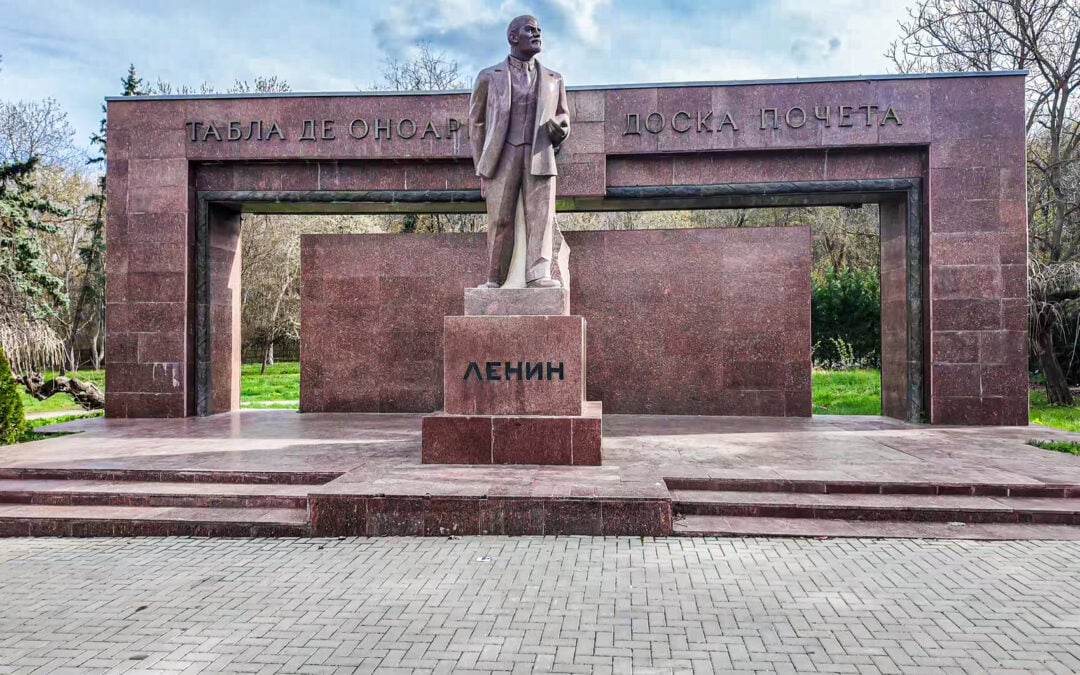
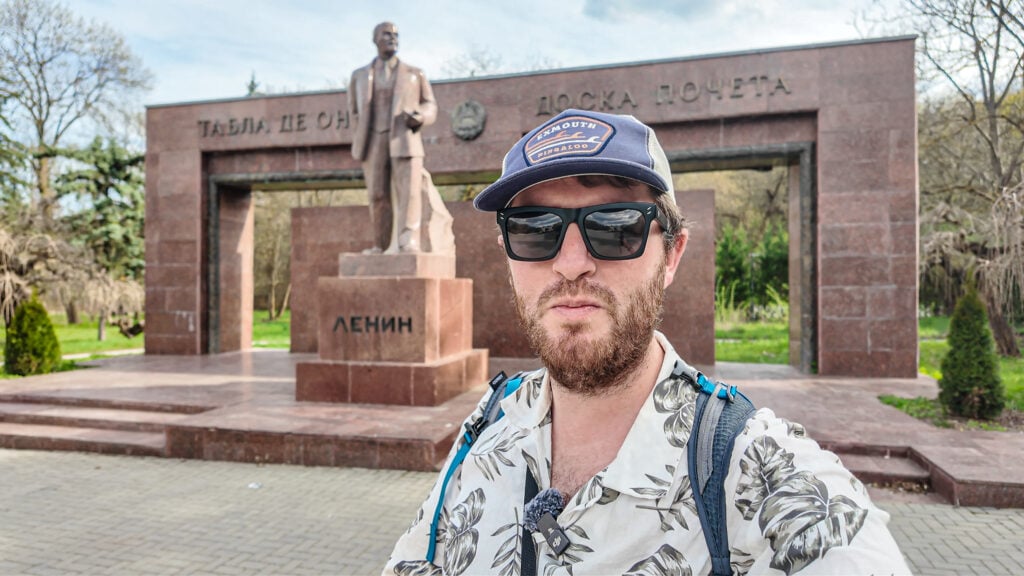
- The Lenin Statue: I think this is Chisinau’s last Lenin statue, and it’s now hidden away in a park on the city’s outskirts. More on this relic below!
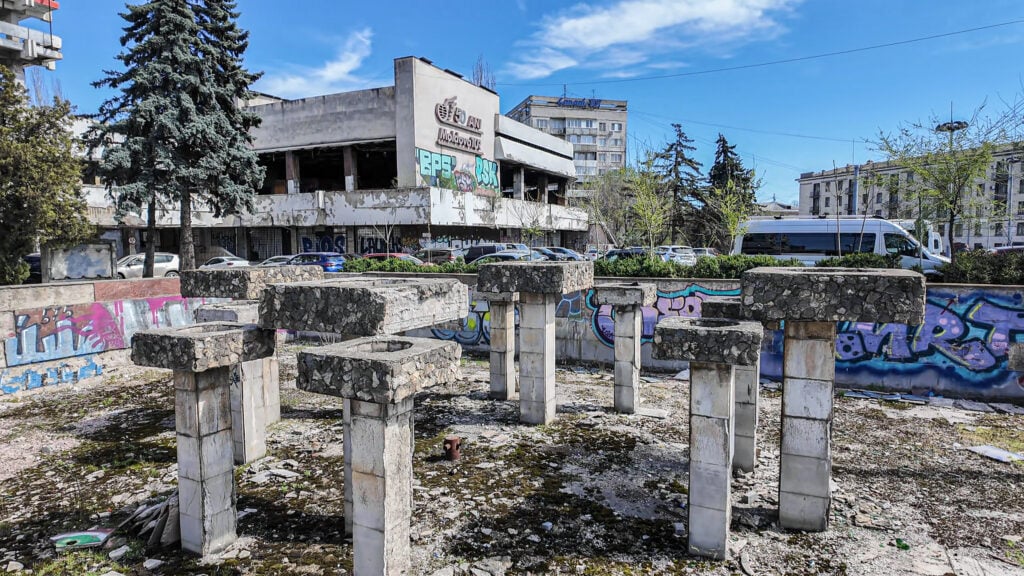
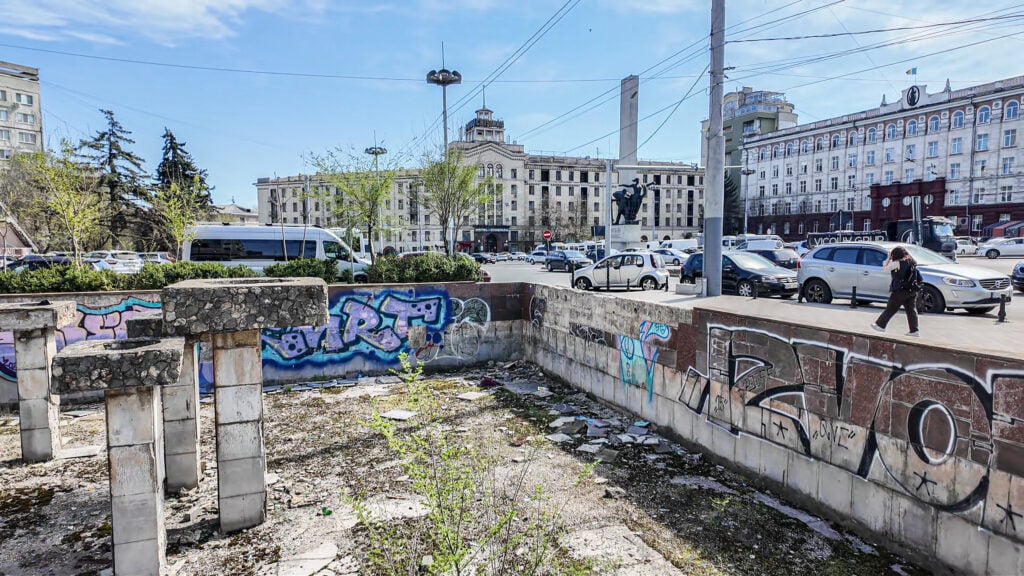
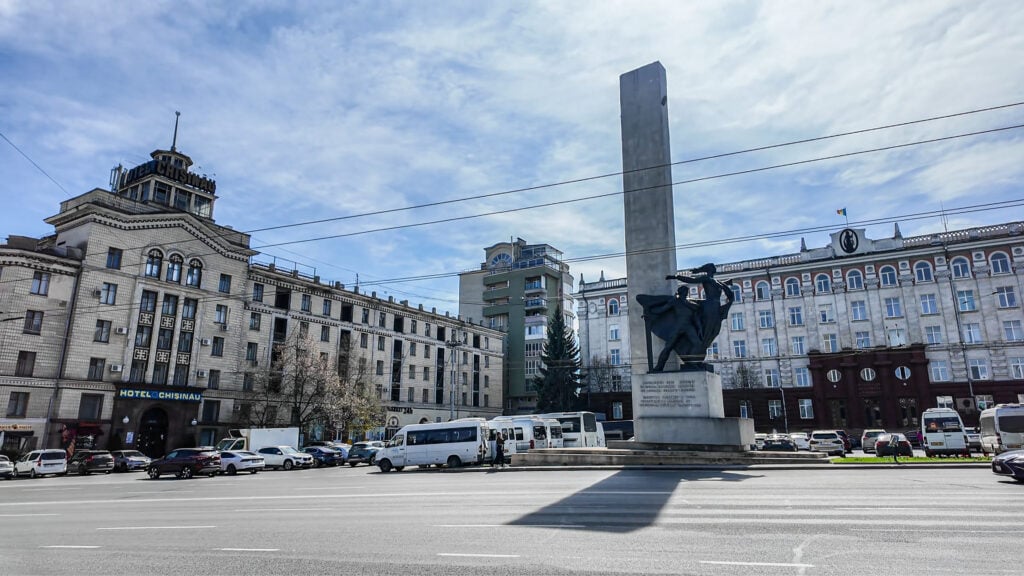
7. Find Chisinau’s last Lenin statue
If you are here for Soviet history, then like myself, you’ll love searching for what is very likely the last Lenin statue in Chisinau. To find it, first head to Valea Morilor (The Valley of the Mills). Walk down the Cascade, then follow the lakeside westwards towards a place called Madison Park, which is a wedding and party venue.
From the lakeside, you’ll have to step through a fence, then walk through a small park, and then you’ll see Lenin outside the wedding venue. I was struck by the fact that this large statue of Lenin once took centre stage in Chisinau, but now he’s hidden away, out here in the sticks.
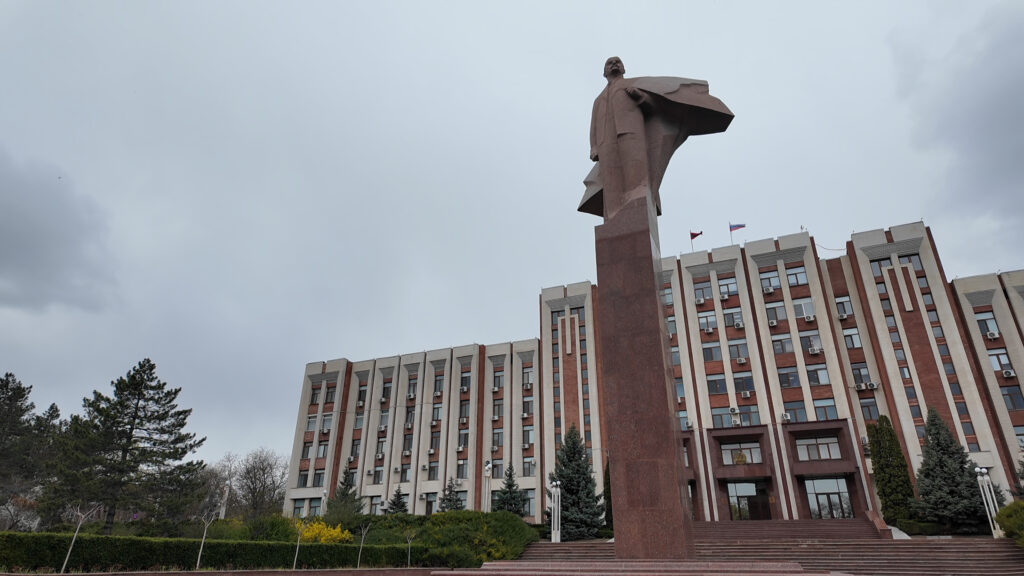
Most curiously of all perhaps, Lenin (and his other communist buddies, who are also here) stares somewhat forlornly at the very capitalist venture he’s plonked outside of. It’s a very different approach to the Transnistrians over the Dniester River, who’ve placed a statue of Lenin right outside of their parliament building. For Molodvans, I suppose, Lenin is now simply a part of history.
8. Visit the Memorial to Victims of Stalinist Repression
Let’s not forget that the Soviet era was often a time of brutal repression. That was certainly true during Stalin’s reign, and like every Soviet Republic, Moldova suffered.
Between 1940 and 1953, the Soviets deported around 46,000 people from the Moldavian Soviet Socialist Republic. This would have included dissidents, ethnic minorities (some 7,500 Gaugaz were deported) and anyone who fell foul of the Soviet authorities. Many would have ended up in gulags, and few would have returned to their homes.
These deportations were never forgotten. In 2013, the Memorial to Victims of Stalinist Repression was unveiled, appropriately enough, outside the train station, where it’s taken on the more informal name ‘Train of Pain.’
I’d advise anyone in Chisinau who’s visiting to explore the Soviet architecture to also pay their respects at this memorial, lest we forget history.

9. Visit the world’s largest underground winery (and see the world’s largest wine collection)
Moldova is far more than it’s recent Soviet past, and I’d say one of the best reasons to visit Chisinau is for the wine. Although Moldovan wine isn’t particularly welll known when compared to say French or Italian wines (but what isn’t?), the country has a winemaking tradition stretching back to around 5000 BCE.
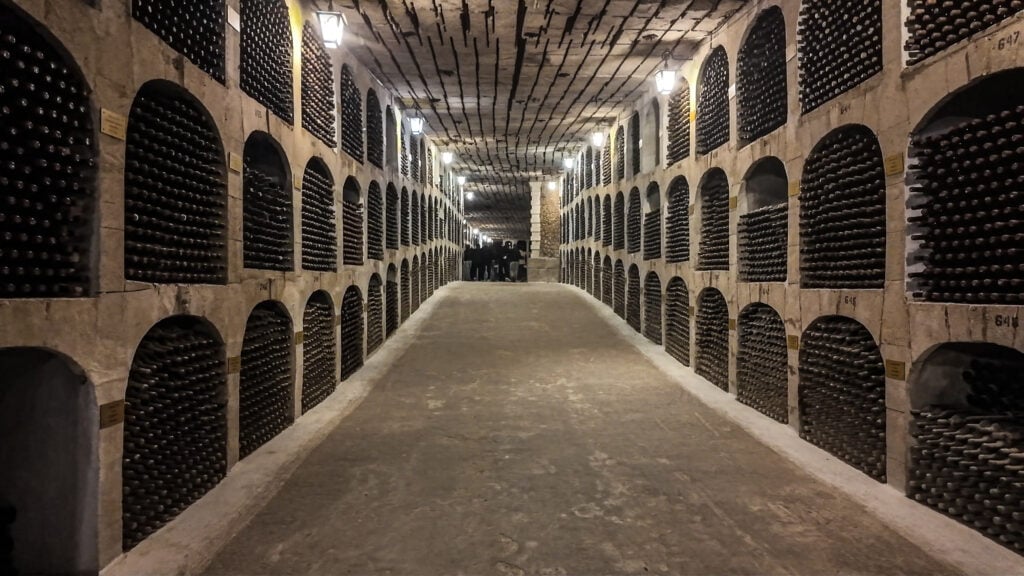
During the Soviet era, Moldovan wine was revered and exported across the Union. Outside of Chisinau, the Soviets even transfomed old limestone quarries into a vast network of underground tunnels for storing that wine. Head to Milestii Mici today, and you can take a tour through the world’s largest undergound winery. With 200 kilometres of tunnels to explore, you’re transported around on an electric land train.
“We have 2 million bottles of wine stored here in,” I was told by Valeria, a Milestii Mici tour guide, when I visited the undergound winery in 2026. Since 2005, the collection has held the Guiness World Record as the largest on the planet, and it’s ever growing. “They started storing wine here in 1968,” she also told me. “Conditions are perfect. The right temperature. The right humidity.”
Valeria also showed us a ‘secret room’, carved into the rock, where Moldovan workers had hidden away rare vintages when Gorbachev tried to stamp out alcohol (unsuccesfully) across the Soviet Union in the 1980s. “They tried to destroy all the wineries and bottles,” she said. “But workers here saved fifty thousand bottles stored in a secret vault underground.”
Moldovan wine exports suffered dramaticallly in 2006 when Russia, the largest market, banned its importation (on political grounds). Since then, Moldovan wineries have begun establishing new markets in the EU, and are now the 11th largest wine producer in Europe.
Milestii Mici is around a 30 minute drive from Chisinau (I travelled there in a Bolt, then the wine bar staff called a taxi for us when we left). You can book guided tours online, with the option for tasting packages at the end. Honestly, if you do only one thing in Chisinau, I implore you to visit Milestii Mici .
10. Haggle at the markets
Chisinau is becoming a tale of two cities. There are plenty of excellent cafes, restaurants and supermarkets you can visit, but equally, I find it’s great fun to leap into the local markets, and to eat, drink and stock up on supplies in a timeless fashion.
The busiest and most famous is the Central Market. It’s an open-air bazaar which the tourism board believes dates back to the 19th century, and it’s packed most days (aside from Mondays, when it’s closed) with vendors selling everything from pickled goods to kitchenware. The Central Market is just a short walk from the main bus station, where you’ll also find plenty of local market stalls spilling onto the streets.
The second market I’d recommend visiting is the ‘Flea Market’, which I’ve sometimes heard called the ‘Lokomotiv Market’. It’s an open-air market by the train station, where you’ll find all sorts of old Soviet memoribilia. For collectors and antiques lovers, it’s an absolute riot of a market.
Read more: Alternative Travel Destinations for 2026!
11. Gorge on Moldovan cuisine
Like the wine, Moldovan cuisine isn’t particualrly well known, but an even a quick city break in Chisinau will have you wanting more. As I was happily informed on the plane ride over, one of the must-try dishes is Mămăligă, a mashed cornmeal dish often served with sour cream or cheese. Other great dishes to try include Sarmale (stuffed cabbage rolls) and Zeama (a hearty chicken soup).
I particularly loved the Plăcintă, a flaky Moldovan pastry that’s stuffed with either sweet or savoury fillings. There’s even a popular restaurant chain named La Plăcinte which specialises in not only its namesake dish, but Molodvan cuisine in general. They have many branches throghout Chisinau, and it’s a great place to try as many traditional dishes as you can.
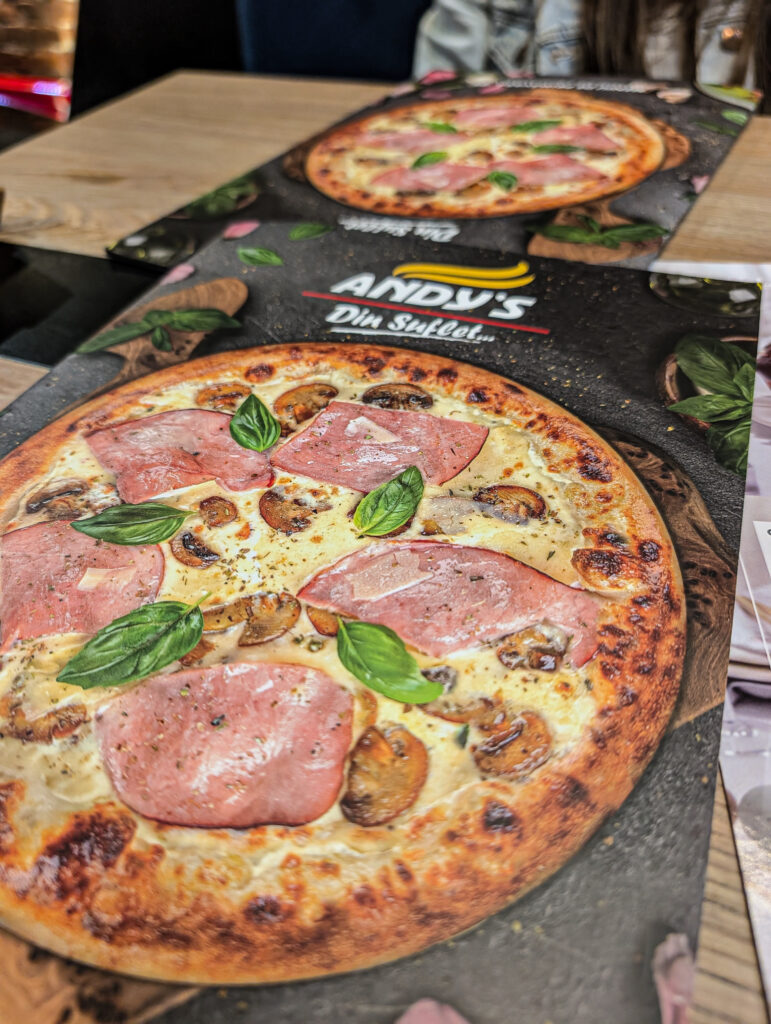
Another popular Moldovan restaurant chain is Andy’s Pizza, which serves up excellent pizzas and a suprisngly excellent selection of Molodvan dishes. It’s a sort of hybrid between resturant dining and fast food. It’s casual, great value, and their many, many branches are always busy.
12. Head to Valea Morilor and chill at the beach
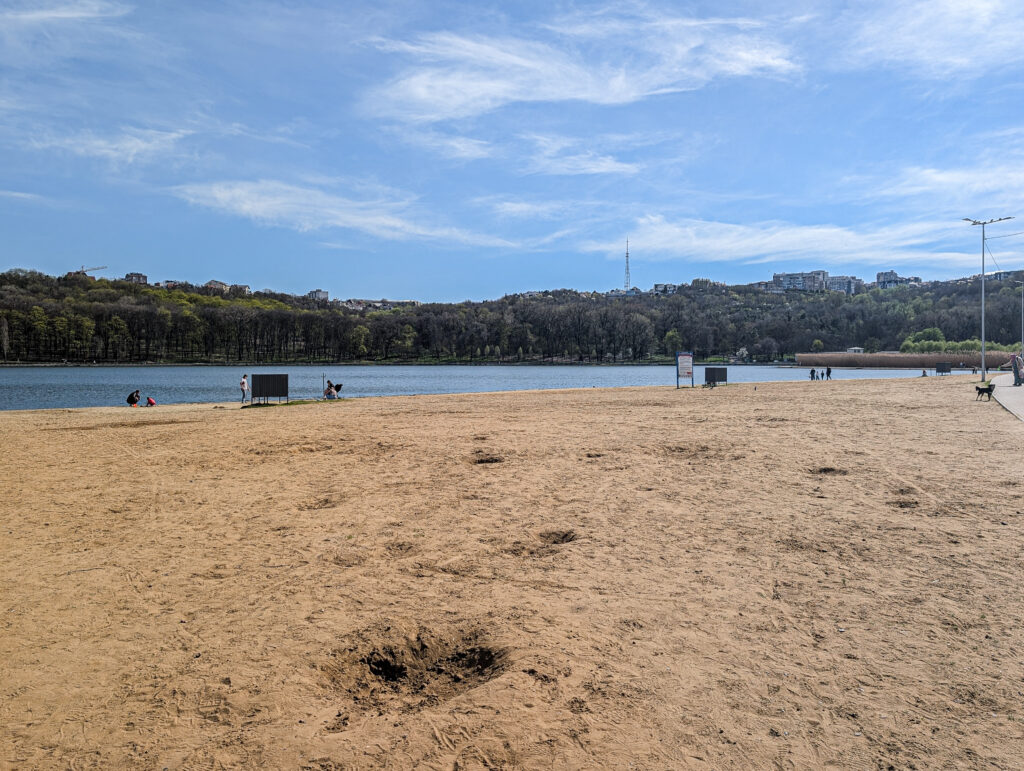
Moldova might be landlocked, but that doesn’t mean there aren’t any beaches in Chisinau. I was suprised to find myself enjoying the sunshine (in March, no less) on the golden sands of a lakeside beach, where beachside bars were opening up for the coming summer season.
Mak your way to Valea Morilor (the Valley of the Mills, and yes, the same place where the Lenin statue is) and you too can enjoy a beach getaway in Chisinau. This large lake is lined with trees and home to a lovely section of sand. Grab a beer, find a spot, and relax after all that sightseeing.
13. Day trip to the Pridnestrovian Moldavian Republic
Just a one hour Marshrutka ride from Chisinau is one of the most curious geopolitical entities in Europe. The Pridnestrovian Moldavian Republic, or Transnistria, is certainly a surreal place, and I’ve met countless travellers who’ve used Chisinau as a base for exploring this oddity.
Transnistria, as it’s better known, is a breakaway nation, a small piece of land on the Dniester River whose predominantly Russian-speaking population declared independence from Moldova when the Soviet Union disintegrated in the early 1990’s. Russian troops stepped in to stop the fighting (and are still stationed here as so called ‘Peacekeepers’), and ever since, Transnistria has governed itself, but with no international recognition. It is a country which officially does not exist. Despite this, they still have their own flag, currency, government, and many of the other trappings of a nation state.
It’s a fascianting place where Lenin statues still stand proud, and the national monument is a T-34 tank. The de facto capital, Tiraspol, can be reached by Marshrutka from Chisinau’s central bus station. It’s a great day trip from Chisinau, but it’s certainly not the only reason to visit Moldova.
Read more: Is Transnistria a Country? Everything You Need to Know.
14. Take the Soviet-style sleeper train to Bucharest
And finally, when you’re ready to leave Chisinau, in my opinion the best way to travel is on the antiquated Soviet-style sleeper train to Bucharest. I love it so much I’ve taken it twice, most recently in March 2026.
For a slow travel experience, the sleeper train to or from Bucharest is quite the experience. The route has been connecting the two capitals for decades, but with more modern transport links available – read: quicker – you might find yourself the sole occupant of an antique sleeper cabin which was built when Gorbachev was still in power.
Geographically, the two capitals aren’t too far apart, but on the old train lines it takes the whole night to travel. The locomotive chugs painstakingly slowly along, before stopping at the border for hours, not just for immigration purposes, but so the carriages themselves can be lifted from one set of wheels to another. Both countries have rail systems with different sized gauge, a tricky and time-consuming obstacle to intercity travel.
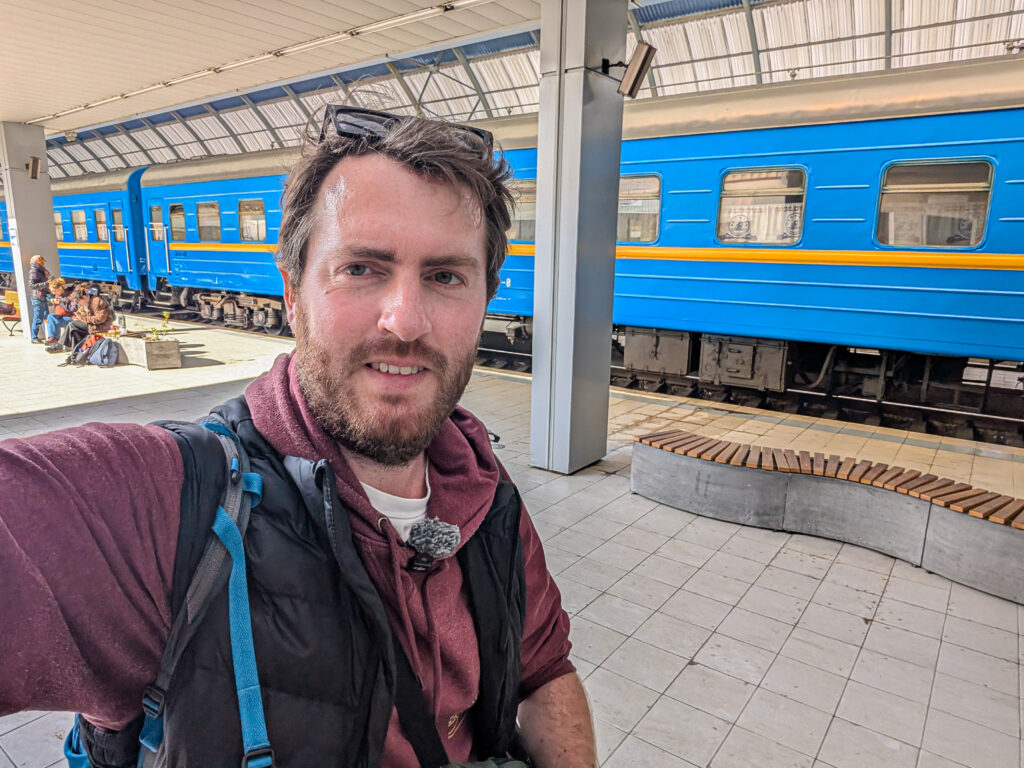
Read more: I rode the Soviet-style sleeper train from Chisinau to Bucharest
Where to stay in Chisinau
Chisinau’s hotel scene has come on leaps and bounds since I first stepped foot into the city on a cold winter’s morning in 2015. Back then I stayed in a rustic hostel near the train station, but I couldn’t find the same place when I was back there in 2026.
No matter, because there are options for all tastes. If you love luxury, or want to experience a little piece of Soviet nostalgia while you can, then Chisinau has you covered.
Here are my top picks for places to stay in Chisinau:
1. Chisinau Hotel
Chisinau Hotel is an old school instition just a short walk from the train station. It’s a Soviet-era hotel. It was once run by the state, catering to the republic’s presumably rare visitors, and was likely the most fashionable place to stay in Chisinau.
It’s not beeen updated in years, of course. Rooms are sparse (but cheap), from what I’ve heard from other travellers, but if you want to relive the glory days of Soviet tourism, there’s no better place to stay.
2. Roxen Hotel & Spa
I stayed here in March 2026, and I have to say it was excellent. This boutique hotel is a short walk from the city centre, and they didn’t mind me and my mates rocking up at 2am after a late night flight from Luton. They have an indoor swimming pool, serve a monstrous breakfast and have a great selection of Molodvan wines and cognacs behind the bar. It’s great value, too. Highly recommended.
3. Bristol Central Park Hotel
I didn’t actually stay at the Bristol Central aArk, but I did have a quick look around when I visited the pub on the top floor for a drink. It looks excellent, although it’s a llittle on the pricier side for Chisinau. The location is unbeatable, however. You’re just a short walk from the main square, so it’s perfect for a city break.
BOOK BRISTOL CENTRAL PARK HOTEL
Map of the best things to do in Chisinau
Here’s a map detailing the sights listed above:
Richard Collett
There you have it. The best things to do in Chisinau. Will you be visiting the Moldovan capital? Let me know in the comments below!

You definitely should educate yourself a bit more before writing something on the topic. Boring article + pretty insulting stuff about drinking habits of Eastern Europeans.
Thanks Lindsay, it’s supposed to be tongue in cheek by the way, I suppose you find Chisanau a boring city to visit then? I actually plan on returning later this year because I enjoyed it so much, perhaps I can update this article to make it more exciting for you.