I travelled across the North Sea on Stena Line’s overnight ferry from the Hook of Holland to Harwich. Here’s what happened, and how you can take the ferry between the Netherlands and England too.
It was 8.30 pm. It was pouring rain as we stepped off the metro onto a sodden platform in the Hook of Holland. We’d just made a 500-kilometre overland journey from Hamburg in northern Germany, and the Dutch railways hadn’t been our friend that day. We were running late after line closures, delays and an unplanned, circuitous route involving no less than 6 trains. We’d arrived at the ferry port just in the nick of time, with 45 minutes to go until check-in closed at 9 pm ahead of our 10 pm departure to Harwich on the Stena Britannica.
The smell of salty sea air was a welcome relief after the added stress of the long journey to the Hook of Holland. Seagulls squawked into the night. Lorry engines rumbled gently as they loaded onto the waiting ferry. Although we had a 7-9 hour crossing ahead of us, right off the back of an 11-hour travel day, I was looking forward to the North Sea voyage.
This would be the first time I’d travelled this historic route from the Netherlands back home to England, and my partner Claire had splashed out so we could enjoy the journey in comfort. That night, we’d be riding in the Captain’s Suite, the fanciest cabin on the ship. It was a short but rainy walk from the Hook of Holland’s metro station to the Stena Line terminal. There were few other foot passengers, and we enjoyed a seamless check-in before boarding. The next morning, we’d awaken in Harwich, having crossed the North Sea in surprising comfort on the Stena Britannica.
Keep reading to learn more about my experience onboard the Hook of Holland to Harwich ferry, including practical tips and advice to help you plan the same journey.
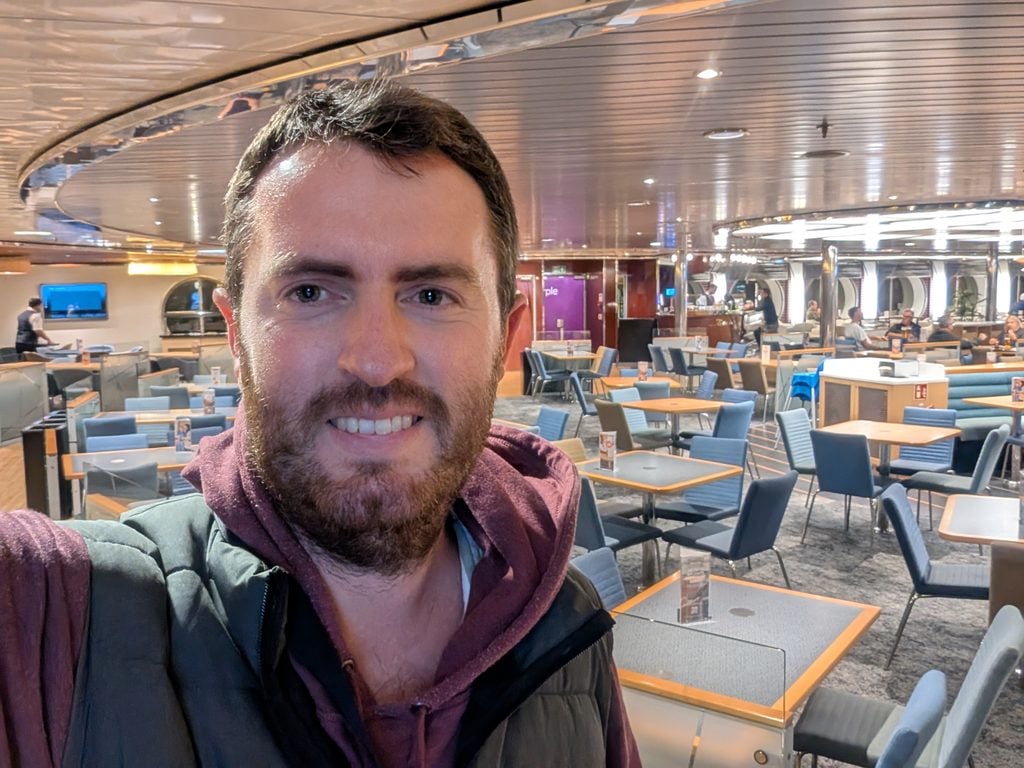
Table of Contents
Quick Facts and Booking Info
Route: Hoek van Holland, Netherlands to Harwich, England
Approximate Journey Time: 7-9 hours
Ferry operator: Stena Line
Ships in service: Stena Britannica & Stena Hollandica
Frequency: Two daily sailings each way
Departure times from Hook of Holland: 2.15 pm (arriving 7.45 pm) & 10 pm (arriving 06.30 am)
Departure times from Harwich: 9 am (arriving 5.15 pm) & 11 pm (arriving 8 am)
Costs: From £56.90 each way for foot passengers, not including optional cabin reservations and upgrades.
Onboard facilities: Restaurant, bars, cafe, duty-free, games, televisions, sun deck
How to book? Tickets available online at Stena.co.uk
Onward travel connections: Metro to/from Rotterdam. National rail services from Harwich International.
The ferry route from Hook of Holland to Harwich
Stena Line operates a twice-daily service connecting the Hook of Holland, in the Netherlands, to Harwich, in England. There are two sailings each way per day, including a daytime service and an overnight ferry on either the Stena Britannica or the Stena Hollandica.
I travelled in October 2026 from the Hook of Holland to Harwich, and enjoyed a comfortable North Sea crossing on the Stena Britannica. Being a big history buff, I decided to look up the route’s origins, and I was pleasantly delighted to discover that this particular route is possibly the oldest continuously operational service connecting England to the Netherlands.
The ferry route is well over a century old, dating back to 1893 when the Great Eastern Railway launched steamships from Harwich to the Hook of Holland. The idea was to provide a seabourne connection for rail travellers, who could alight in Harwich, board the steamship, arrive in the Hook of Holland, and immediately join the European rail network.
Before this, another steamship route operated between Harwich and Rotterdam, running from 1863 onwards until the Hook of Holland became the primary terminus for passengers. Of course, long before these ‘scheduled’ services existed, there was millennia of maritime trade and travel (and warfare!) between England and the Netherlands. The two identical Stena Line ferries that now travel this historic route both launched 25 years ago, and provide modern transport and onboard accommodation for foot passengers and drivers.
The Hook of Holland-Harwich Ferry Schedule
But when do these ferries actually depart? I sourced the following (approximate) schedule in November 2026. Bear in mind that schedules can and do change depending on the weather and crossing conditions. As mentioned already, there are two crossings in each direction each day. Departure and arrival times are all local (remember there’s a time difference between the UK and the Netherlands).
** Check-in closes 60 minutes before departure for foot passengers. **
** Check-in closes 90 minutes before departure for vehicles. **
Hook of Holland to Harwich
2.15 pm departure, arrives 7.45 pm
10 pm departure, arrives 06.30 am
Harwich to Hook of Holland
9 am departure, arrives 5.15 pm
11 pm departure, arrives 8 am
* Exact departure and arrival times may vary daily *
Read more: A Luxury Cargo Ship Cruise on the Caspian Sea
How to get to Hook of Holland Ferry Terminal
I was taking the ferry to get back home to England after a week in Europe. Luckily, the Hook of Holland’s Stena Line ferry terminal is incredibly well connected to the continental railway system (even if we did have a nightmare journey on the Dutch railways that same day!).
The ferry terminal is around 30 kilometres northeast of Rotterdam, and there’s a metro station right by the entrance. We arrived at Rotterdam Centraal, which has rail connections across Europe. Here we hopped onto Rotterdam’s metro system, first catching Line E (the dark blue line) to Beurs, then changing to Line E (the yellow line).
You’ll need to alight at the Hoek van Holland Strand stop on Line E. Step off the metro, walk for about 2 minutes, and you’ll be at the terminal. From Rotterdam, the entire journey takes around 45 minutes. It’s super easy, and you can tap on and off the metro using a contactless card or Google Pay, etc.
There were few facilities at the terminal itself, aside from a fancy-looking nautical-themed sushi restaurant. There are a few shops within walking distance of the terminal in the nearby town, if you have time to spare before check-in. I’d advise stocking up on supplies in Rotterdam before taking the metro, although there are plenty of facilities once you’re onboard the ship.
If you’re driving, then the terminal is around 40 minutes from Rotterdam, although you may not want to drive through the city. You’ll need to take N223 to the Hook of Holland harbour.
Top Hotels To Book In Rotterdam
If you need to stay over before your departure or after arriving in Rotterdam, here are a few great hotel options:
nhow Rotterdam – CLICK HERE FOR PRICES & AVAILABILITY
Motel One – CLICK HERE FOR PRICES & AVAILABILITY
Haven Hotel Rotterdam – CLICK HERE FOR PRICES & AVAILABILITY
How to get to Harwich International Port
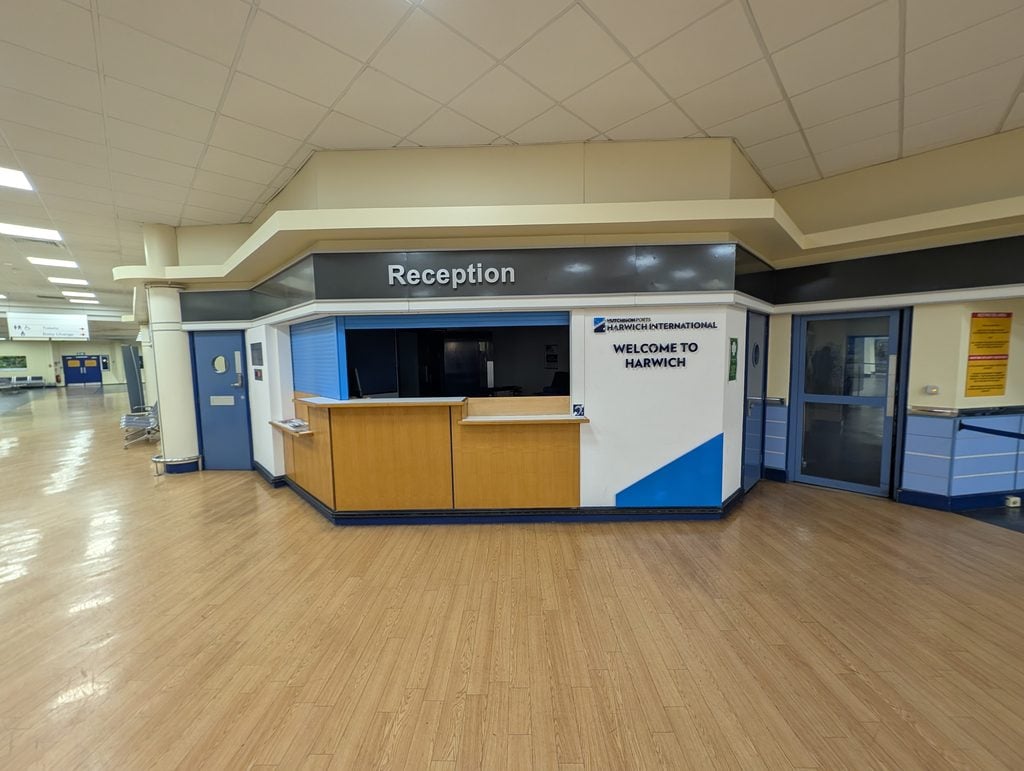
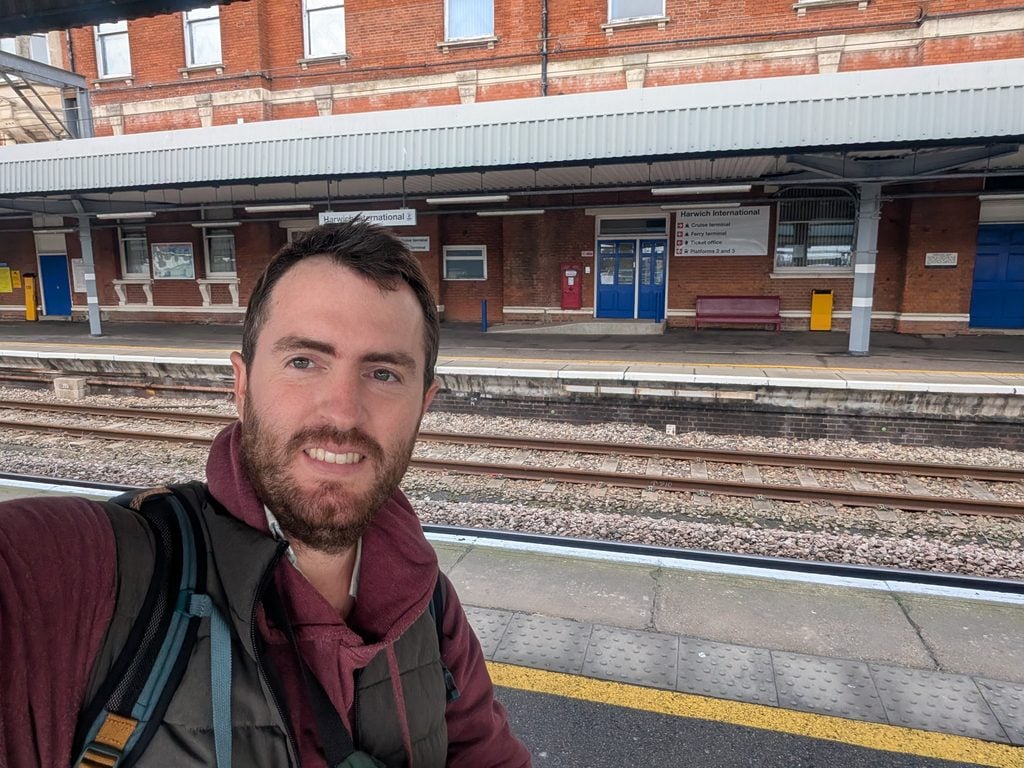
If you’re travelling the other way, from England to the Netherlands, the ferry departs from Harwich International Port. This small terminal sits on England’s east coast, in Essex. There’s an incredibly convenient train station (Harwich International) outside the terminal, with direct connections to London Liverpool Street Station. These trains are operated by Greater Anglia and take around 1.5 hours. There are limited facilities at Harwich International Port, so again, stock up in advance.
The port is located outside of the town of Harwich, which is further down the train line. Make sure to get off at Harwich International for the terminal, rather than Harwich Town.
If you’re driving, you’ll need to take the A120 to Harwich.
Checking in and boarding the ferry
For foot passengers, check-in closes 60 minutes before departure. If you’re in a vehicle, check-in closes 90 minutes before departure.
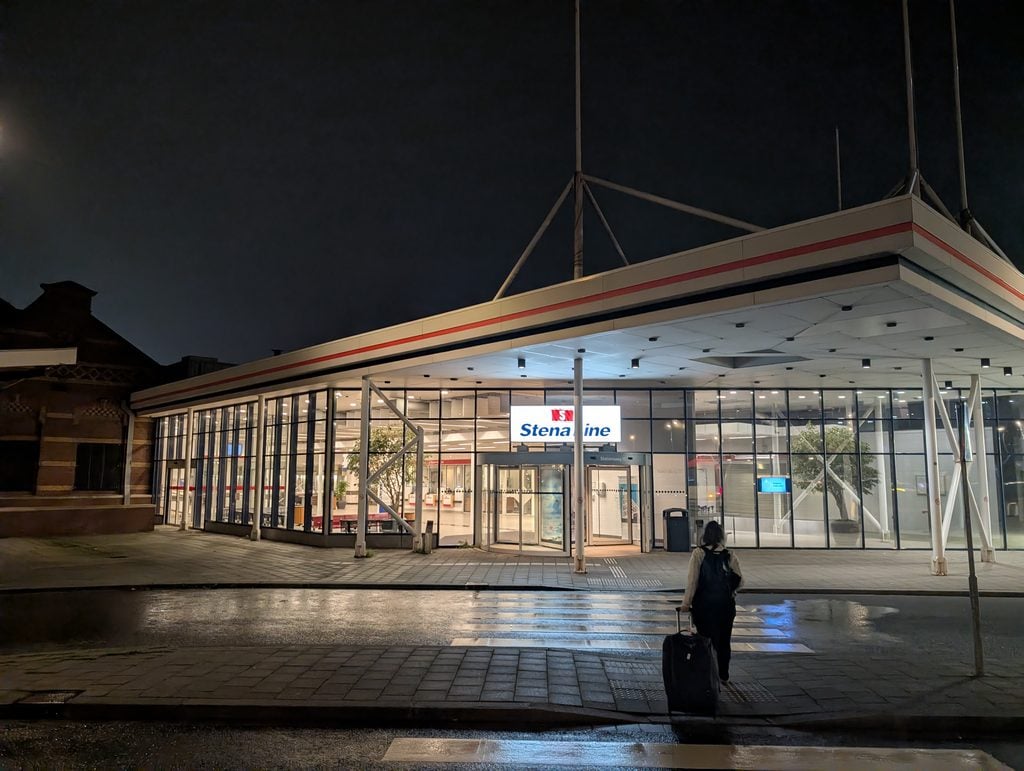
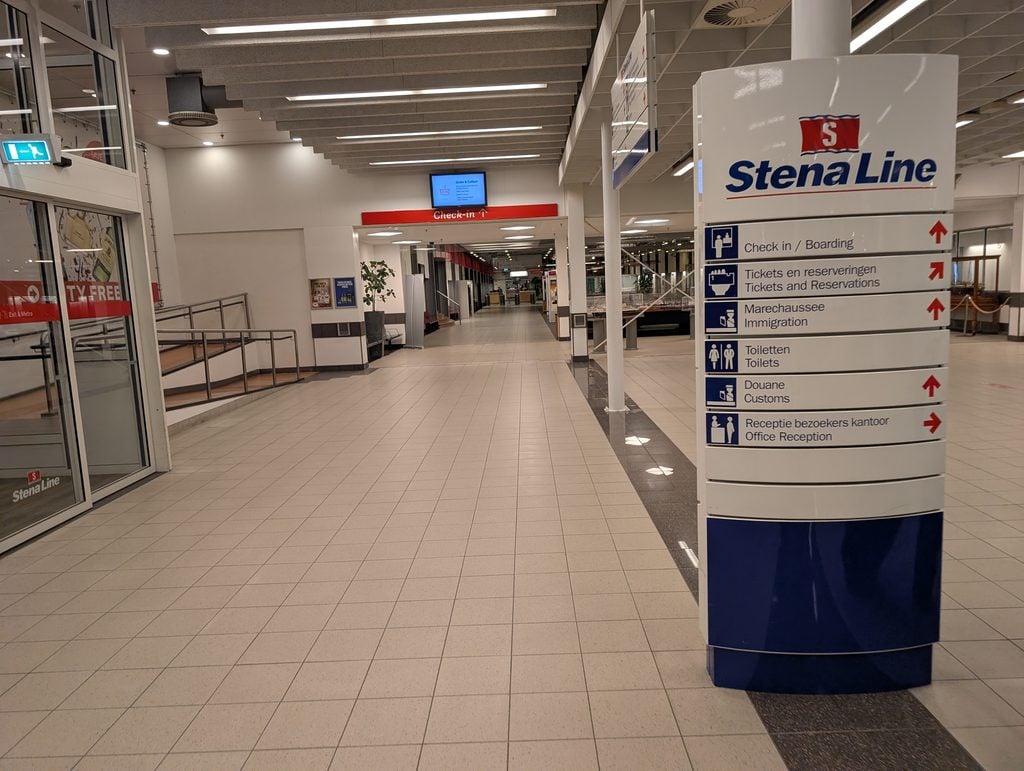
I was travelling on foot, and we arrived at the Stena Line Terminal around 45 minutes before check-in closed. There is a line of ticket booths on the right-hand side as you enter, but if you’ve already booked online, ignore these and continue down (past the curious sushi restaurant) to another desk.
You’ll be checked in, and if you’ve booked a cabin, issued a door ‘card’ providing access to said cabin. Once you have your boarding pass/card, you’ll then move on to immigration. There were two booths, where we both went through the usual ‘EES’ rigmarole and were allowed out of the European Union.
There didn’t seem to be a huge number of foot passengers, and there were no queues for either check-in or immigration. For me, this is one of the big advantages of foot ferry travel. Compared to the disastrously long queues you now get in airports, it’s a remarkably seamless and (dare I say) pleasant check-in/immigration procedure.
From here, it’s about a ten-minute walk (there are travelators along the route) to the gangplank, where you can board and then find your cabin. If you don’t have a cabin booked, you might be able to upgrade your ticket at check-in or onboard.
Types of tickets and how to book
Prices can vary massively depending on availability and the type of ticket you actually book. There are different options for foot passengers and those with vehicles. There are various cabin types available, all at extra costs.
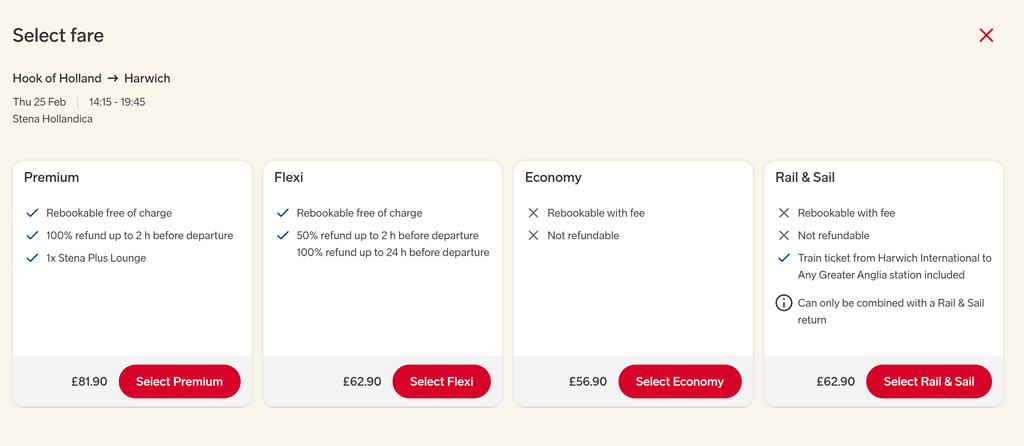
Typically, there are four types of tickets, which may or may not include a cabin:
- Economy: Non-refundable and non-changeable. The cheapest tickets available.
- Flexi: Free changes. Fully refundable up to 24 hours before departure. 50% refundable up to 2 hours before departure.
- Premium: Free changes. Fully refundable up to 2 hours before departure. Access to the Stena Plus Lounge.
- Rail & Sail: Non-refundable and non-changeable, but also includes a train ride at either end!
The lowest economy fare for foot passengers I could find departing in the next few months was £56.90 each way, which isn’t bad value at all. Bear in mind, however, that this doesn’t include a cabin. You’ll need to add this on as you progress through the booking screens on the Stena Line website. A standard twin cabin costs an extra £55, but this cost can be split if there are two of you sharing. You can also upgrade to the Captain’s Suite if you fancy some luxury.
The same ticket types apply to vehicles and drivers, but there are different costs. For a single driver with a standard-sized vehicle, prices start from £93.50 each way. This increases in price depending on the size and type of vehicle, and the number of passengers and cabins.
Book directly with Stena Line for the best prices.
** If you’re travelling with pets, they also neeed to be booked into ‘Pet Accomodation’ at the time of booking. **
Travel Tramp’s Top Tip
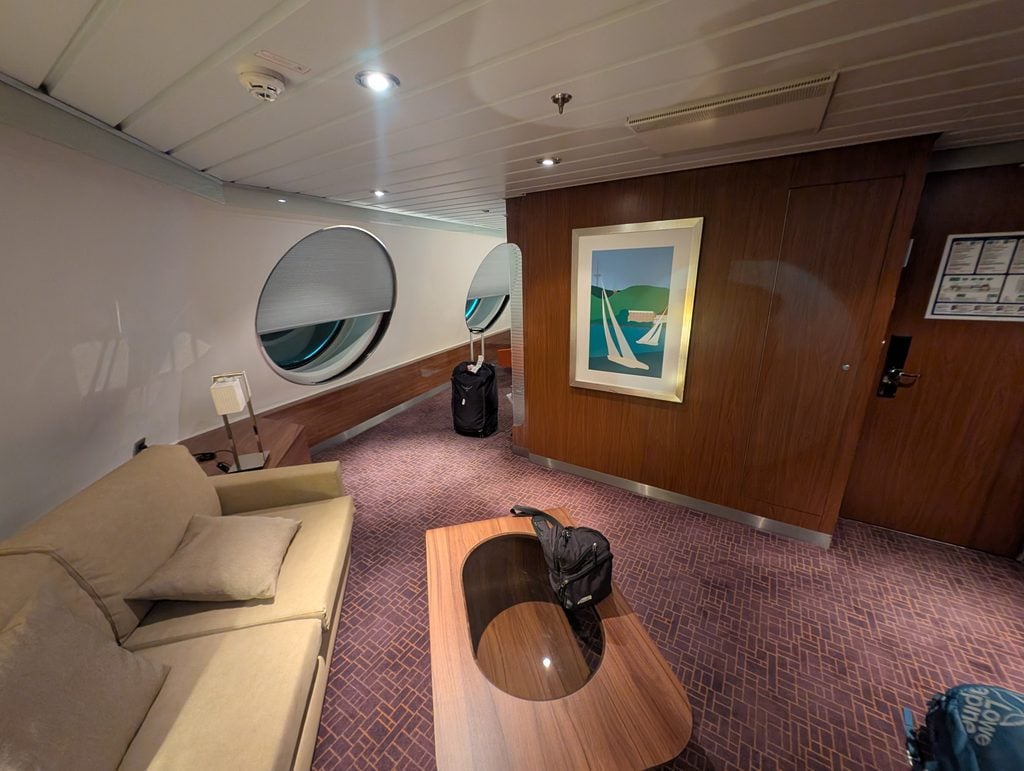
Looking for a little luxury? Why not upgrade to the Captain’s Suite? This two-person room offers an en-suite, several portholes, a lounge area and a complimentary mini-bar. Typical upgrade costs start from £103 per cabin.
Read more: How to Take the Ferry from Turkey to Northern Cyprus
Eating and drinking onboard Stena Britannica
I travelled on the Stena Britannica. As far as I know, the Stena Hollandica is identical, so the facilities should be exactly the same on either ship. After arriving later than expected, we’d had no time to shop for supplies beforehand, but were pleasantly surprised to find that the onboard catering facilities were reasonably priced, as we had nowhere else to eat dinner!
We dumped our bags in our cabin (there’s more on the ‘Captain’s Suite’ to come), and headed straight for the Galley. This large dining area features a buffet-style restaurant serving hot meals for breakfast, lunch and dinner. Listen out for announcements on the tannoy, because they’ll let you know exact serving times throughout the journey. The restaurant was open for service before departure, so you can arrive much earlier if you fancy to have dinner and drinks here.
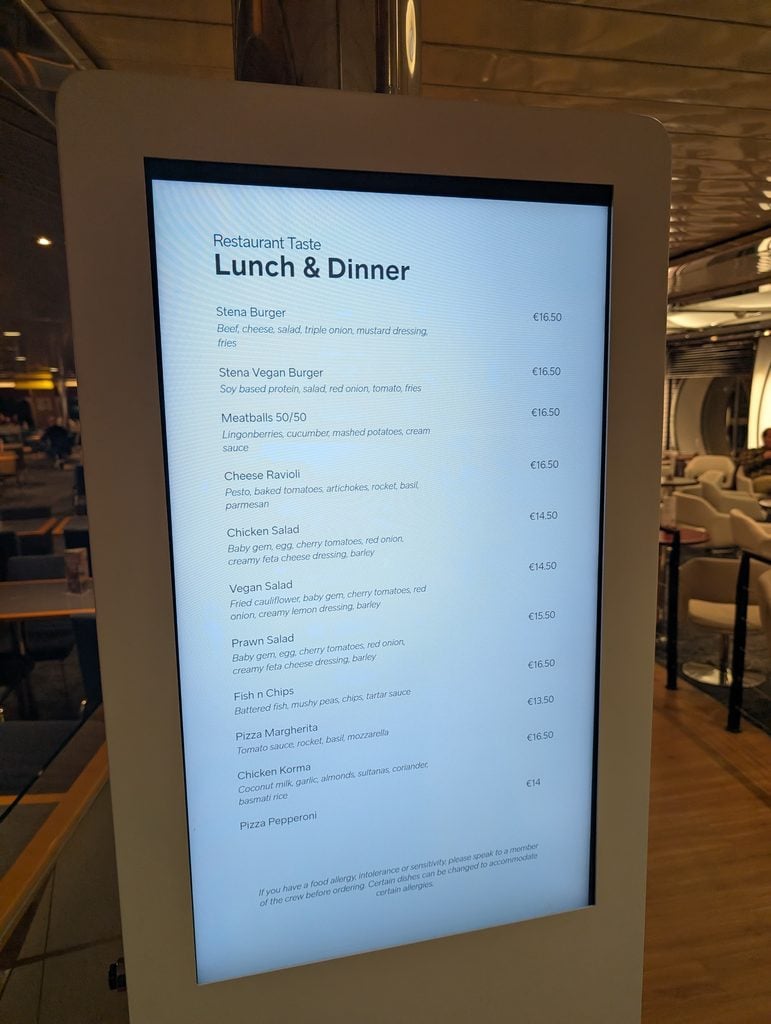
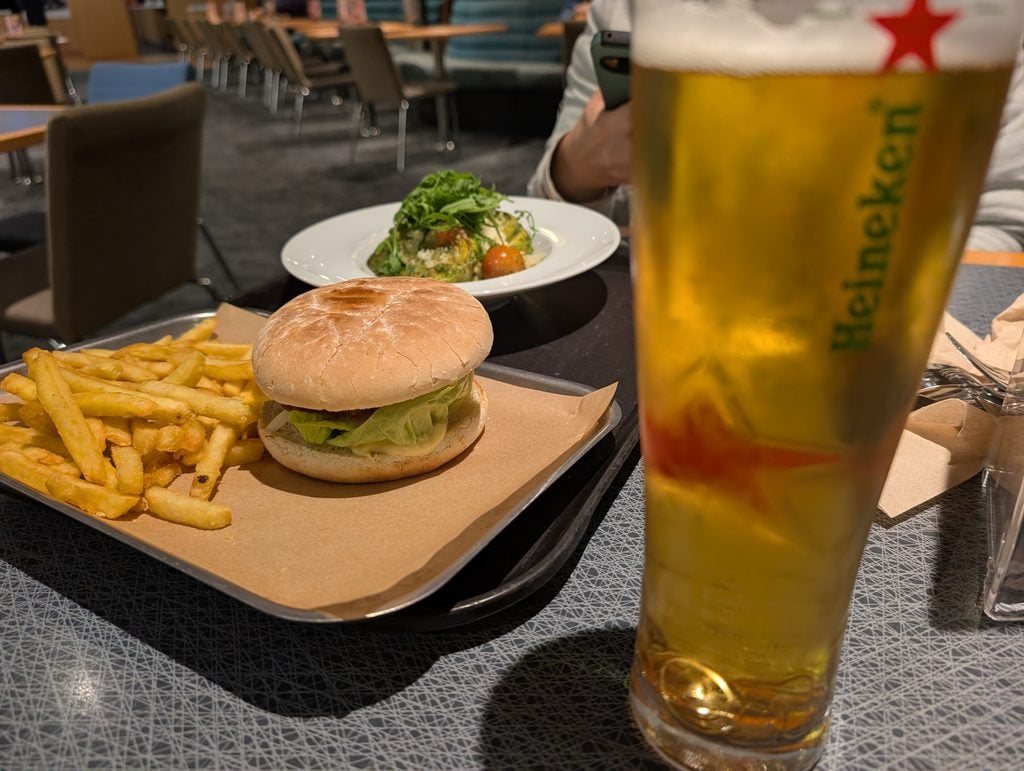
The food was suprisingly gourmet too. I went for the plant-based burger and chips. My partner Claire opted for the cheese ravioli. There was also fish and chips, salads, pizzas, curries and more. Main meals cost between 13.50 Euros and 16.50 Euros.
In the same galley area there’s a bar, where you can order drinks, including wines, beers, spirits and cocktails. They also serve lighter snacks like sandwiches. I enjoyed a pint of Heineken (a classic Dutch lager), which set me back 5.90 Euros. Sit back and watch the television screens while you eat and drink.
In the same area, there’s also the ‘Stena Plus Lounge,’ which costs extra to upgrade to, but is also included in certain premium ticket prices. This lounge offers more space, table service, and I believe a selection of snacks and drinks are included too.
Separate from the main Galley is another bar and cafe just along from the Duty Free shop. Here you can purchase alcoholic drinks and sandwiches in the evening. There were a few PlayStation 5 game consoles to play on, a slot machine area, kids’ area, and plenty of TV screens showing live Champions League football. Depending on the weather, you can also enjoy the ‘Sundeck’. Needless to say, we didn’t get much of a view (or any sun) when we departed after sunset and arrived before sunrise. In summer, though, I imagine it would be wonderful sitting on the deck with a cold pint watching the North Sea cruise past.
The next morning, the restaurant and cafes were serving breakfast between 5.30 am and 6.30 am. This will vary depending on your arrival time, so again, listen out for the tannoy announcements. For breakfast, the Galley serves a Full English Breakfast, hot rolls and more. The cafe serves coffees, teas and pastries. We went for a light breakfast of Pain au Chocolat, which only set me back a few Euros.
Arrival into Harwich
Our ferry was scheduled to arrive into Harwich at 6.30 am (UK time), and we were rudely awoken by a ship-wide announcement at around 5 am. When I looked out of the porthole in our cabin, I could see that we’d already docked at the harbour in Harwich, so I’m not sure when we’d actually arrived in England. Thankfully, they allow you to sleep in.
The trucks were already moving off the ferry when the Galley opened at 5.30 am. They continued serving until 6.30 am, when vehicle owners were called down to the parking decks. As foot passengers, we waited until last when we were finally called down to the lower deck. The gangplank wasn’t in operation in Harwich, so we had to wait in the loading bay for a bus to pick us up. The bus then dropped us at the terminal, where we queued up for border control with the rest of the foot passengers.
Once you’re through immigration, you’ll find Harwich International Station right outside the terminal. We hopped on a train about an hour after arriving and were in London before lunchtime.
Top Hotels To Book In Harwich
If you need to stay over before your departure or after arriving in Harwich, here are a few great hotel options:
The Pier Hotel – CLICK HERE FOR PRICES & AVAILABILITY
Read more: The Eastern Express: How I Survived Turkey’s Epic 26-Hour Train Ride
Captain’s Suite Review
Now, to round off this article is the review you’ve been waiting for. How was our journey in the Captain’s Suite?
Well, we had high hopes when we checked in at the Hook of Holland Ferry Terminal. The check-in staff commented that we were staying in the “best cabin on the ship,” and they graciously reminded us that the minibar in that cabin was completely complimentary.
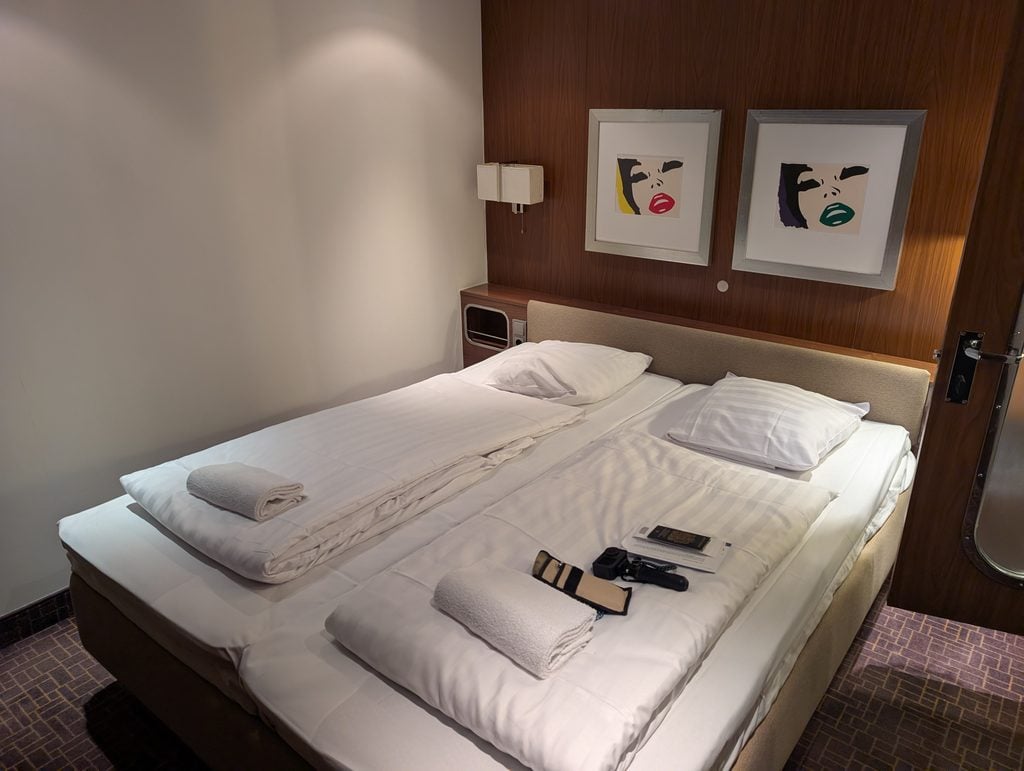
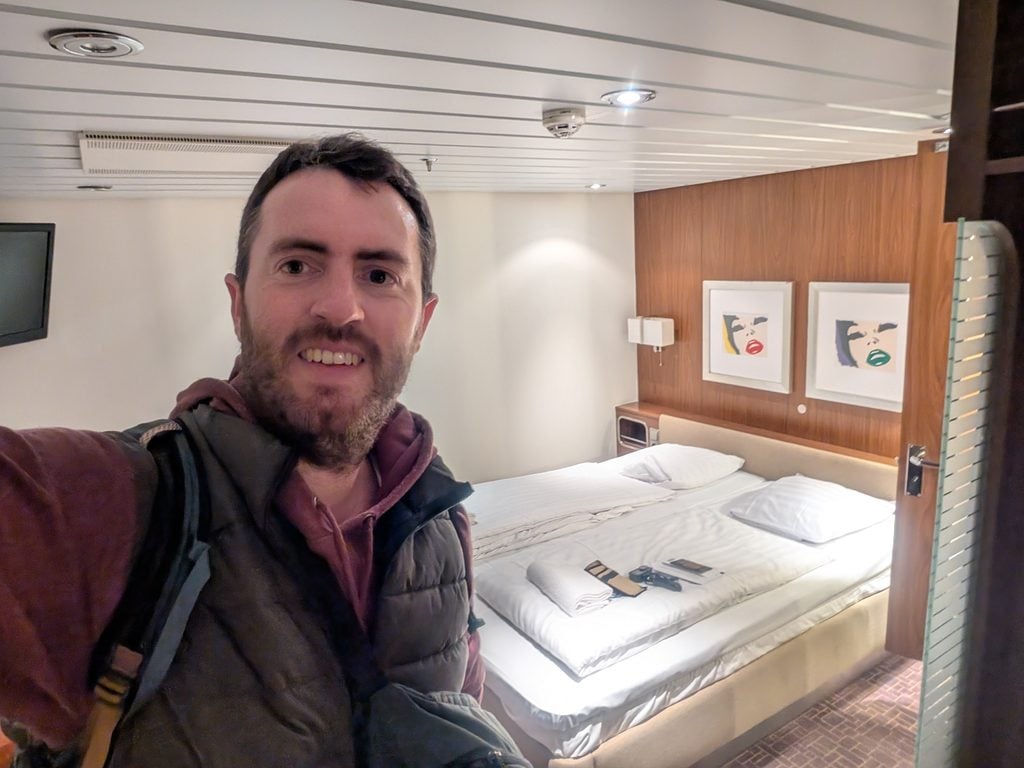
Well, dear reader, the Captain’s Suite did not disappoint. We walked into an extremely spacious lounge and living area, with multiple panoramic portholes (not that there was much of a view in the dark). The mini bar was stocked with Heineken lagers, four small bottles of wine (two red, two white) and multiple snacks and soft drinks. There was tea and coffee on the counter, and a separate sleeping area with an en-suite, swivel chairs facing towards more portholes, and a king-sized bed.
I won’t lie, I enjoyed one of the best nights’ sleep I’ve ever had on a ferry. My only complaint is that the crossing wasn’t longer so we could enjoy the suite more! All in all, it was certainly worth the added cost to upgrade.
There you have it! My guide to taking the ferry from the Hook of Holland to Harwich. Would you cross the North Sea with Stena Line? Let me know in the comments.